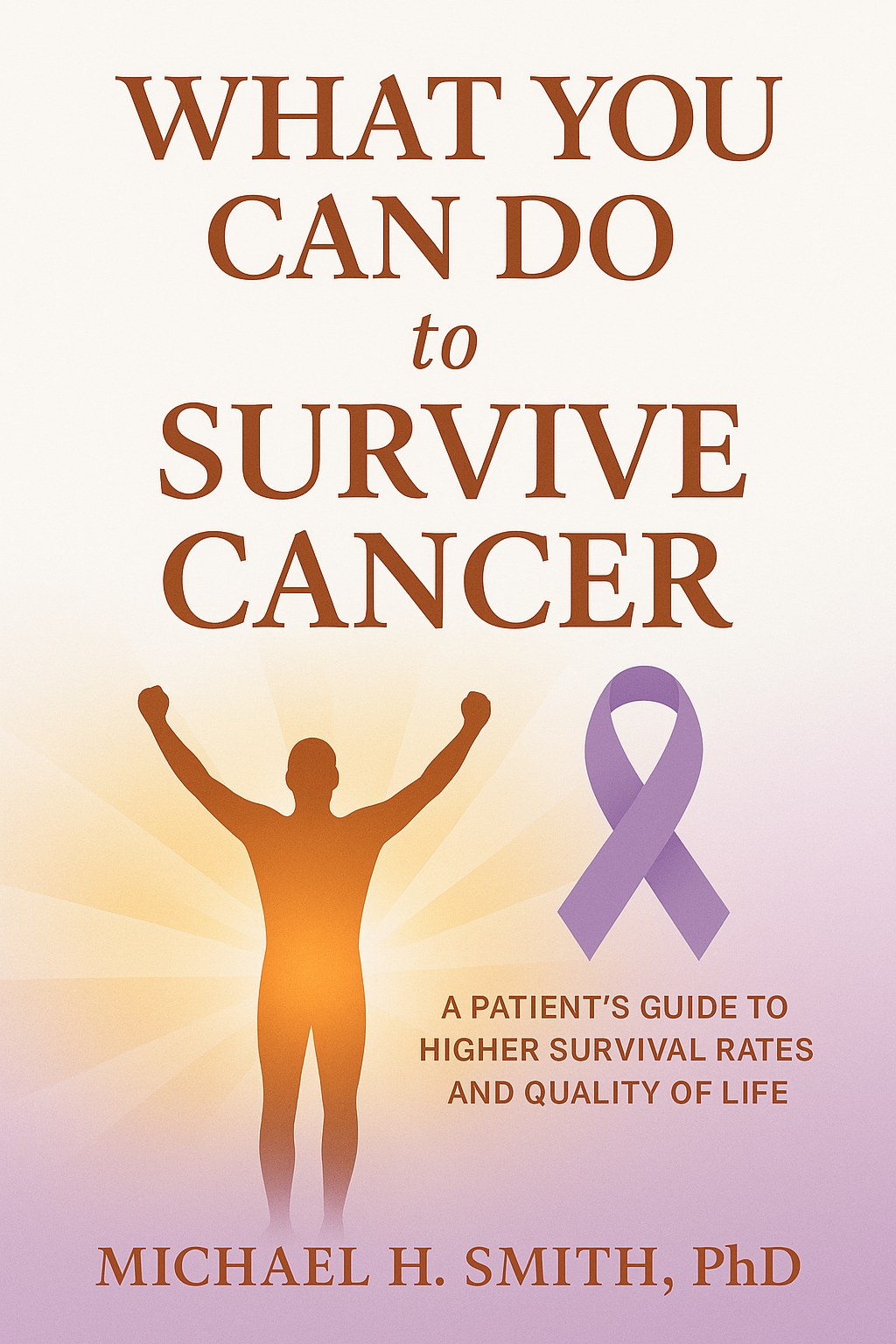
Front cover of What You Can Do to Survive Cancer

What You Can Do to Survive Cancer

A Patient's Guide to Higher Survival Rates and Quality of Life

An 810-page guide to the decisions, habits, and questions that are in a cancer patient's own hands -- from diagnosis through treatment, recovery, and survivorship. Written by a two-time cancer survivor and research scientist, with forewords by physicians.

The goal is to provide the book free to cancer patients, with distribution expanding as funding becomes available.

810pages
678cited references
35chapters on the questions patients ask most
300+strategies, in 20 categories

What the book does

Most of what is written for cancer patients explains what medicine will do to them. This book is about the other half: what the patient can do. Every chapter answers a question patients actually ask -- Should I get a second opinion? What do I eat during chemotherapy? When is a fever an emergency? How do I pay for travel to treatment? What is a tumor board, and can I ask for one? -- and grounds the answer in published evidence, cited in the text.

The book benefited from feedback from physicians, oncology professionals, data scientists, and patients, and carries forewords by physicians. It is organized so a frightened, exhausted reader can find what they need quickly, or read it cover to cover over months: a detailed table of contents, about 70 pages of Chapters-at-a-Glance summaries, a full index, and an appendix listing more than 300 strategies in 20 categories. The key sentences are set in bold for readers with chemo brain who skim.

Who it is for

  • Newly diagnosed patients and the people caring for them
  • Patients in treatment who want to help their own outcome
  • Survivors managing follow-up, recurrence risk, and quality of life
  • Clinicians and trainees who want to know what patients need to hear

What readers and reviewers say

"A wonderful service to humanity."

Stuart Russell, PhD, Distinguished Professor, UC Berkeley; coauthor of Artificial Intelligence: A Modern Approach

"It provides what may be the most comprehensive and systematic guide available for helping patients become effective partners in their own care."

Stephen M. Shortell, PhD, Dean Emeritus, School of Public Health, UC Berkeley

"He is living with your 'Cancer Bible' by his side. It has helped him to understand what is going on and what he needs to do to fight."

Terrie Williams, PhD, University of California, Santa Cruz

"This book has lots of practical knowledge about cancer and the AI system makes it easy to use!"

Lawrence O. Hall, PhD, Co-Director, Institute for AI + X, University of South Florida
For clinicians, cancer centers, and residency programs

The goal is for patients to receive the book at diagnosis, when it helps most, through cancer centers. Academic centers have expressed interest in studying its effect on patient engagement and outcomes; the author welcomes partners for that work and can provide a small number of author copies to institutions for review.

In residency training

Residents across specialties care for cancer patients from their first year, and understanding those patients' practical concerns is part of good clinical training. Because the book is organized around the questions patients ask, it could serve as a six-month reading curriculum -- one or two chapters a week -- supporting the ACGME competencies in patient care, interpersonal and communication skills, and systems-based practice. The author would welcome working with a program director to pilot this.

About the evidence

Clinical claims are cited to the book's 678 references: peer-reviewed research, clinical guidelines, and major cancer organizations. Where the book discusses how much patients can improve their own survival, the figures are labeled as modeled estimates drawn from published research -- observational studies and randomized trials of individual strategies. The modeling is documented in companion papers available to researchers.

Scope and limits

The book does not replace a patient's care team and says so throughout. It tells patients when to call, what to ask, and how to prepare -- not what to decide. Safety instructions (fever thresholds, drug interactions, supplement cautions during treatment) are drawn from guideline sources and are set in bold. Responsibility for the content rests with the author.

Companion materials for clinicians and researchers: a one-page brief and the survival-modeling papers. Request them through the contact below.

The AI companion

Every copy comes with an AI assistant that is instructed to answer only from the book's content, without searching the internet, and to say so when a question falls outside it. Patients can speak their question and hear the answer, in more than 100 languages, on a phone, at 3 a.m., without typing. Examples of questions patients can ask: What should I ask my doctor? Should I get a second opinion? What do I do if I feel pain?

This companion goes with the book What You Can Do to Survive Cancer. The current version runs on an earlier draft of the manuscript and will be updated with the final book. It is an educational tool, not a medical professional: its answers may contain errors or omissions. Confirm medical decisions with your care team, and seek urgent medical care for emergencies.

Open the companion
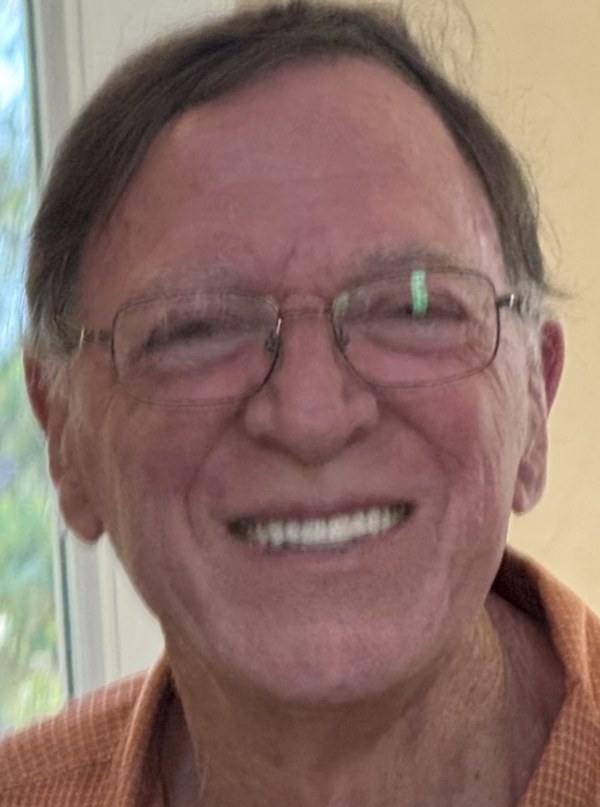
Michael H. Smith, PhD

About the author

Michael H. Smith, PhD, is a scientist, engineer, and cancer survivor. In 2016 he was diagnosed with two advanced cancers five weeks apart -- a Stage IVA tongue cancer and a Stage IIIB small-intestine carcinoid -- and survived both. He spent fifty years in artificial intelligence research, earned four degrees from the University of California, Berkeley, including a PhD in Electrical Engineering and Computer Sciences under Lotfi A. Zadeh, the founder of fuzzy logic, and is a Past President of the IEEE Systems, Man, and Cybernetics Society. He wrote this book to answer the question every patient asks: What can I actually do?

The book is published by Patient Survival Press. The author takes no royalties on copies given to patients.

Review copies, partnerships, and press

Cancer centers, residency programs, patient organizations, and researchers: write to info@patientsurvivalpress.com to request a review copy, the clinician brief, or the modeling papers, or to discuss a distribution, funding, or study partnership.

Paperback, 8 × 10 in., 810 pages, 35 chapters plus appendices. ISBN 979-8-9826193-0-3. First edition, 2026. Patient Survival Press.